
Learning the Land
Virtual tour of the Trees on our Estate

At Mt Pleasant Acres Farm, on the Eastern Shore of Maryland, there lies a witness tree. It is a centuries old Tulip poplar tree (Liriodendron tulipifera) that has witnessed generations of life. It has seen slavery and freedom, life and death, and many other changes over the years. It was a gathering spot for people to pray and commune with each other, and I spent many hours in her presence. This was the first tree that I knew intimately and piqued my curiosity to deeply learn about many more.
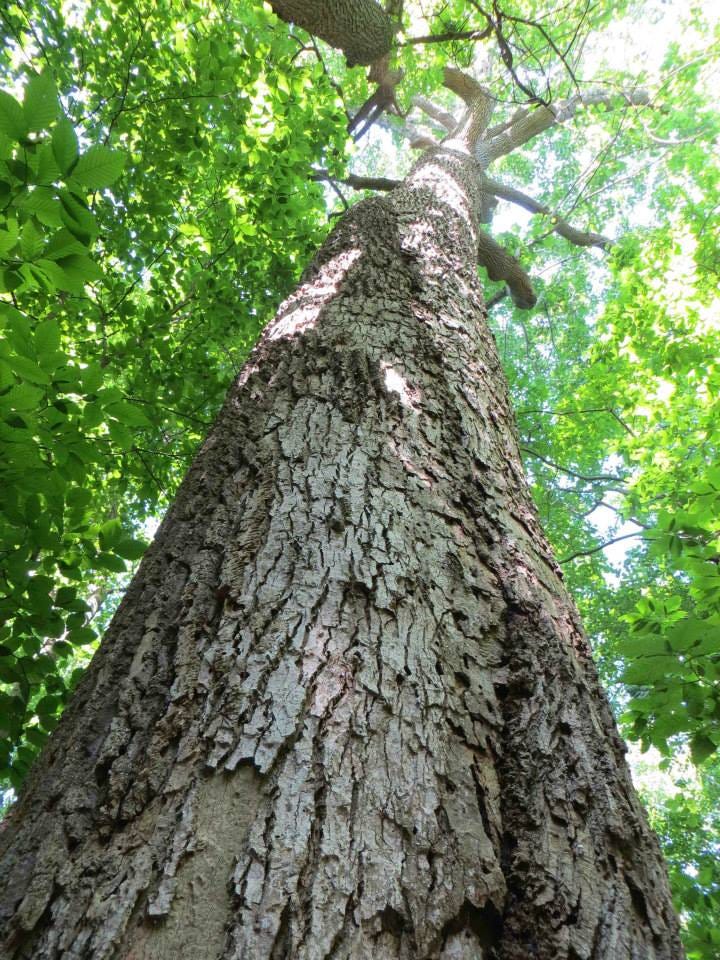
Trees and forests always fascinated me. I grew up being able to play in the woods behind my house where I tripped over roots and grew tall alongside saplings. I was a naturalist before I knew what that meant and my curiosity about trees and plants and rocks and nature fueled many of my lifelong passions.
Right now, I am blessed to steward 20 acres of old growth forest with my family in Trinidad. We are in an extremely biodiverse region of Trinidad and the entire world. We are not only home to native and endemic species, but we are also in an area that was farmed over 100 years ago so there is evidence of imported tree crops like rubber (Hevea brasilensis and Castilla elastica) and Mangoes (Mangifera indica), Cocoa (Theobroma cacao) and coffee (Cafea spp.). The roads name is Hobal which is an Indigenous word for the hog plum tree (Spondias mombin) that is scattered throughout.


There are also native trees used for sustenance, medicine and crops growing like Tonka bean (Dipteryx odorata), Stinking toe (Hymenaea courbaril), Silk Cotton (Ceiba pentandra), Genipa (Genipa americana), Incense tree (Protium spp.), Bois Rose (Brownea coccinea), Roucou (Bixa Orellana) and Sandbox Tree (Hura crepitans). The last owner planted West Indian Cedar (Cedrela odorata), Mahogany (Switenia mahogani), Cyp (Coria alliodora), Breadfruit (Artocarpus altilis), Guava (Psidium guajava) and Citrus like rough skin lemons, oranges and limes to use as building material and food.


It used to be a hunter’s haven, as hinted by its oldtime name El Recreo Estate. So, there are many trees planted/ propagated throughout the land with the specific purpose of serving wildlife. On a walk you will find Pommerac (Syzygium malaccense) littering the ground with bite marks covering them and gris gris palm trees (Aiphanes horrida) that are a treat to humans and animals alike. This means that in the absence of hunting, our estate serves as a bit of a sanctuary and it also borders the actual recognized (but not protected), Northern Range Game Sanctuary.


I am good at identifying the obvious suspects, especially those with fruit on them. However, many trees still evade my identification. One person who has helped with this is Francis Morean who pointed out trees to me like Serette (Byrsonima spicata), Wild Nutmeg (Virola surinamensis), and helped me identify Wild Chataigne (Pachira insignis).
Our friend Richard Cruz came to visit and unlocked some more tree species for us while consulting with us about the maturity and viability of our timber trees. He added Olivier (Buchenavia capitata), Tapana (Hyeronima alchorneoides) Cyp (Cordia alliodora) and Laurier (Ocotea spp) to the list.
I have a goal to be able to identify, map and label all of the distinct tree species on the estate. These trees hold the history and the future in their roots and seeds. One of the reasons to learn them more intimately is to be able to use them for their food, lumber, dye, medicine, fiber. My interest goes way beyond their common and latin names and creates an embodied practice in my life of actual re-remembering through research and practice the uses of our forest friends. This is all aimed at educating and preparing the next generation to conserve these ecosystems, preserve this knowledge and thrive in ways that integrate indigenous technologies.
An example of this embodied practice with Pachira insignis


Seeing the fuzzy black/brown fruit pictured above on massive trees in the forest signals a tasty treat may be waiting for you on the forest floor. If you can get to them before the wild hogs, deer and lappe!
This is known as Wild chataigne in Trinidad and the latin name is Pachira insignis. It is a fast-growing, tropical, evergreen tree native to South America and the Caribbean, often reaching 15–30 meters tall with a gray trunk and spreading branches. It is identified by large, palmately compound leaves (5-9 leaflets) and massive, solitary flowers featuring 5 red-brown petals and 450-700 prominent, red-purple and white stamens.
The mature nuts can be roasted or boiled for a tasty and nutrious snack. They can also be dried and turned into a flour substitute.
I enjoy them boiled the best with salt and olive oil drizzled on them, as they have a soft savory taste reminiscent of other starches like potatoes or breadfruit. Roasted it taste like a cashew and raw it reminds me a bit of mild coconut meat.
To roast or boil, I soak them overnight, remove the brown shell and then proceed to cook. Even though they are very nutritous and tasty, i recommend eating in moderation as i have felt some mild purgative effects from eating too many lol.
HOW TO SUPPORT
If you want to support this work and even visit one day, please consider purchasing something from our Amazon wishlist or send an email to aleyafraser@gmail.com, sharing any resources, ideas or words of advice you can lend us.
We are preparing the space for visitors currently by building infrastructure, blazing marked trails and planting gardens. We can use your support!
Thanks for reading and supporting!
Such amazing biodiversity! And beautiful pictures. So fun to take a virtual tour.
This was a lovely virtual tour. Thanks so much for sharing!